Vols Tools: from formula to usable application
Our calculator platform for energy, finance, property and everyday tasks. This case study explains the actual interface, models and limitations. Try the linked calculators yourself without creating an account.
The starting point: a number is not enough
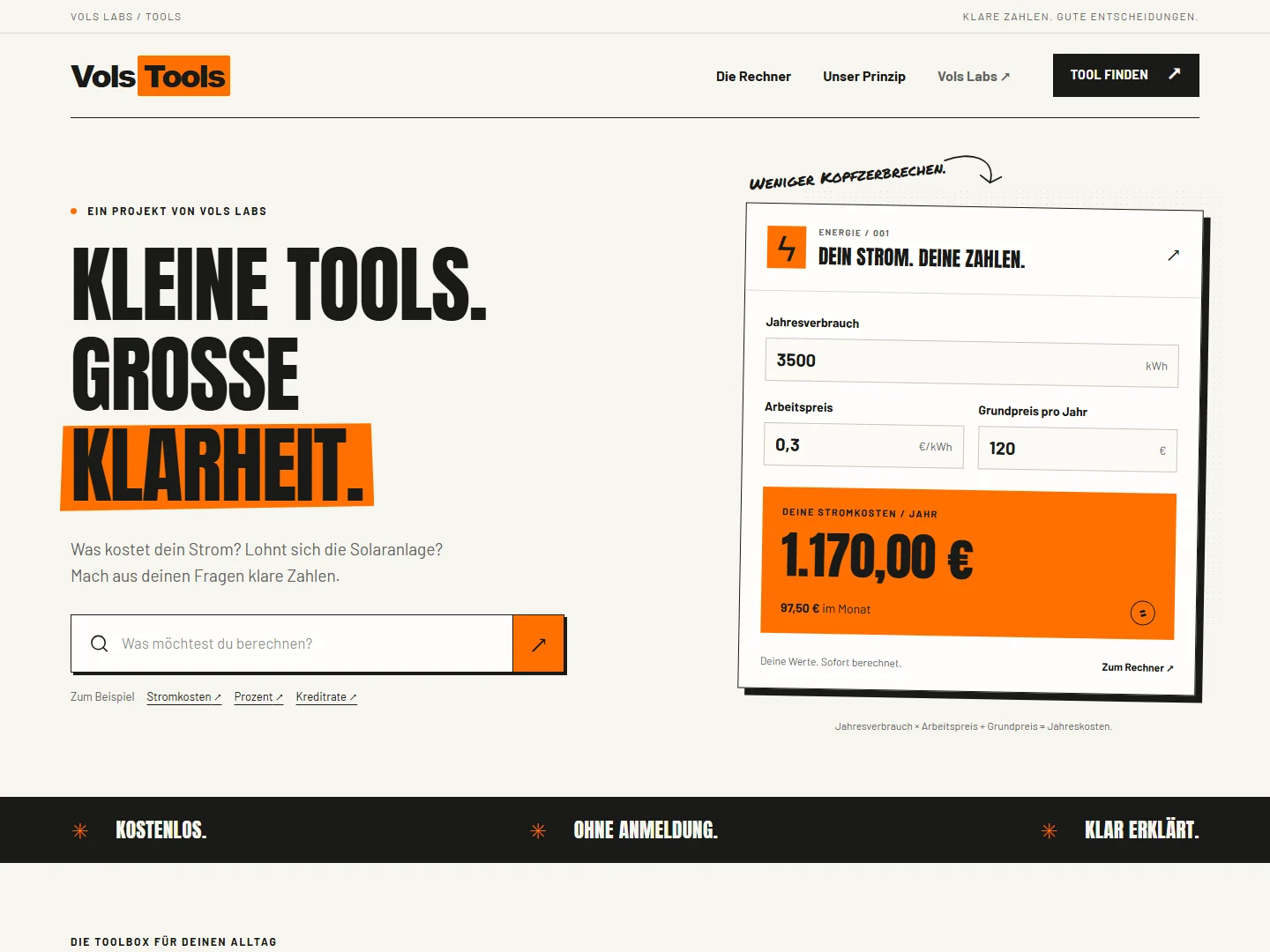
An online calculator can produce a number quickly. Without units, a formula and conditions, that number is hard to assess. Vols Tools makes the calculation part of the application: the question, inputs and results belong together. For example, operating-cost calculations are not presented as complete investment decisions.
The published product
At this case study's review date, the public sitemap contains 14 calculators, including electricity costs, percentages, compound interest, property loans, heat-pump electricity use and solar-storage economics. Categories group tasks. Public use requires no account. This describes the reviewed state, not a promised count of future tools.
A calculation you can follow
An example with illustrative values: 2,000 kWh × €0.35/kWh gives €700 annual usage charges. Add a €120 fixed charge for €820. Changing only consumption to 5,000 kWh gives €1,750 usage charges and €1,870 total. Independently check the €1,050 difference as 3,000 kWh × €0.35/kWh. These prices are not current tariff offers.
Different questions need different models
The heat-pump electricity calculator examines electricity demand. The heat-pump versus gas comparison models operating costs for two heating systems. Solar storage examines additional value compared with solar without storage. Keeping these questions separate prevents applying a simpler model to a broader decision. Sources and excluded costs are listed on each calculator page.
Verification and release
Development separates the model, inputs and presentation. Reference values are defined independently before changes. Verification includes normal and extreme inputs, mobile layout and understandable errors. After release, public URLs are checked. A successful build alone proves neither a correct model nor availability of the new version. Website release checks also cover links, languages and sitemap.
Evidence and limitations
The image shows the real product interface, not an invented client project. Links lead to public calculators. These observations do not establish user counts, revenue, rankings or guaranteed savings. Models remain simplifications. Missing data and excluded costs require separate review before a decision. Report questions and corrections to the operator.